


APPENDIX A: VOICE LEADING OVERVIEW
The Independence of the Voices
The voices in a piece of music make the best counterpoint if they move in an independent way rather than in constant parallel or contrary motion. A mixture of contrary, oblique and similar motion allows the lines to have melodies that move independently of each other and facilitates imitation between the voices.
When considering similar motion, there is an important fact to take into account. In 16th century polyphony (and in most tonal music) parallel 3rds, 6ths and 10ths are considered to make good voice leading provided that not too many successive similar intervals are deployed in sequence. However, parallel unisons, 5ths, octaves and 12ths are avoided.
It is difficult to explain why parallel 3rds, 6th and 10ths should be considered OK whereas parallel unisons, 5ths, octaves and 12ths should not. It's partly to do with the purity of the latter perfect intervals and partly due to the fact that when sequences of 3rds and 6ths follow each other they often switch between major and minor versions of the same intervals, so that some degree of variety is maintained whereas parallel perfect intervals always produce exact parallel movement with no such variation and so destroy the independence of the parts. This rule about not allowing parallel 5ths, 8ves, unisons and 12ths is the most important and consistently applied "rule" in all of voice leading and is generally adhered to in most 16th century and tonal music.
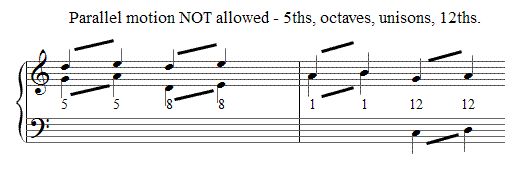
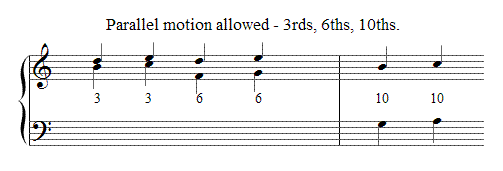
Note: Where large numbers of instruments are involved, parallel octaves and unisons are used where voices follow the same melodic line for some length of time (hence no counterpoint intended). This is never true of parallel 5ths or 12ths in tonal music. Parallel 4ths can be used between upper voices but only when accompanied by parallel 3rds and 6ths.
I should mention here the issue of "hidden" 5ths and octaves. This is where 5ths, 12ths or octaves are approached from the same direction. The "hidden" comes from the idea that if we fill in passing notes in the movement then these create actual parallel 5ths, 12ths or octaves. Some writers on the subject suggest that these are avoided almost, or as much as, actual parallels in tonal and pre-tonal music. It is certainly the case that composers prefer to approach these intervals by oblique or contrary motion but, according to my analyses, hidden 5ths, 12ths and octaves are common in all periods of music in spite of what some theorists would say about them. However, they are more common where middle voices are involved and not so common between the melody and bass. I've highlighted these in the full analyses where they occur.
Next Topic: Arpeggiation and Passing Notes